What is corrugated board?
Corrugated board is made of a wavy middle layer — the flute — glued between flat paper liners. The flute works like a series of arches: it gives the board stiffness, stacking strength and cushioning while keeping it light.
Flutes are named with letters. The letters are not in order of size; what matters is the thickness and the number of waves per metre. Thinner flutes have more, smaller waves.
Common flute types at a glance
Typical values; exact thickness varies slightly between board producers.
| Flute | Approx. thickness | Typical use |
|---|---|---|
| F-flute | about 0.8 mm | Premium retail boxes, fine printing |
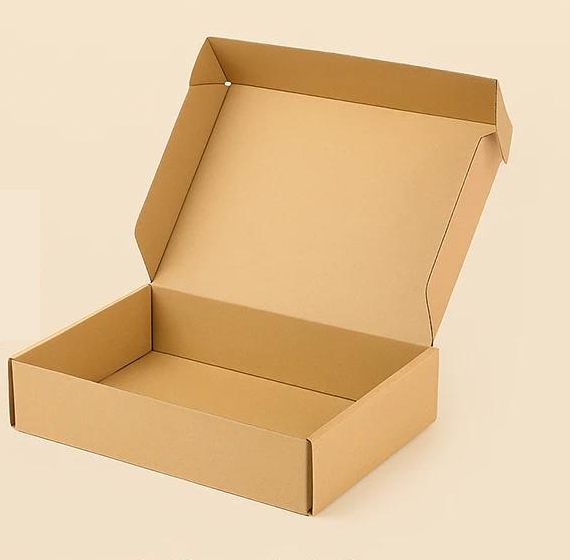
| E-flute | about 1.5 mm | Mailer boxes, retail and cosmetic boxes |
| B-flute | about 3 mm | Shipping boxes, heavier products |
| C-flute | about 4 mm | Transport cartons, stacking strength |
| BC double wall | about 7 mm | Heavy or fragile goods, export cartons |
E-flute: thin, smooth and print-friendly
E-flute has small, tightly spaced waves. The surface is smooth enough for high-quality printing, the board folds cleanly and boxes look sharp and premium. It still offers far more protection than a folding carton.
- E-commerce mailer and subscription boxes
- Retail boxes that also travel by parcel
- Cosmetics, electronics accessories and gift sets
- Boxes where the unboxing experience matters
B-flute: more cushioning and strength
B-flute is roughly twice as thick as E-flute, with larger waves. It absorbs more impact and resists crushing better, which makes it the usual choice for shipping heavier or more fragile goods. The surface is less smooth, so high-end graphics are usually applied by litho-lamination — printing on paper that is then laminated to the board.
- Shipping boxes for heavier products
- Glass, ceramics and other fragile items
- Outer cartons that are stacked on pallets
- Products where protection matters more than print
Side-by-side comparison
| E-flute | B-flute | |
|---|---|---|
| Thickness | about 1.5 mm | about 3 mm |
| Print quality | Very good, smooth surface | Good; best results with litho-lamination |
| Cushioning | Moderate | High |
| Crush and stacking strength | Good for light to medium loads | Better for heavier loads |
| Storage and freight volume (flat) | Lower | Higher |
| Typical products | Mailers, retail, cosmetics | Shipping boxes, heavy or fragile goods |
How to choose
- Weight: light and medium products usually suit E-flute; heavier products lean towards B-flute or double wall.
- Fragility: the more fragile the product, the more cushioning (thicker flute or inserts) it needs.
- Shipping method: single parcels through courier networks need more protection than pallet shipments.
- Printing: if the box is part of your brand experience, E-flute gives the best print surface.
- Storage and freight: thinner board takes less space when shipped and stored flat.
Not sure? Tell us the product, its weight and how it will be shipped, and we will recommend the board — and test it with a sample.