Always think in inner dimensions
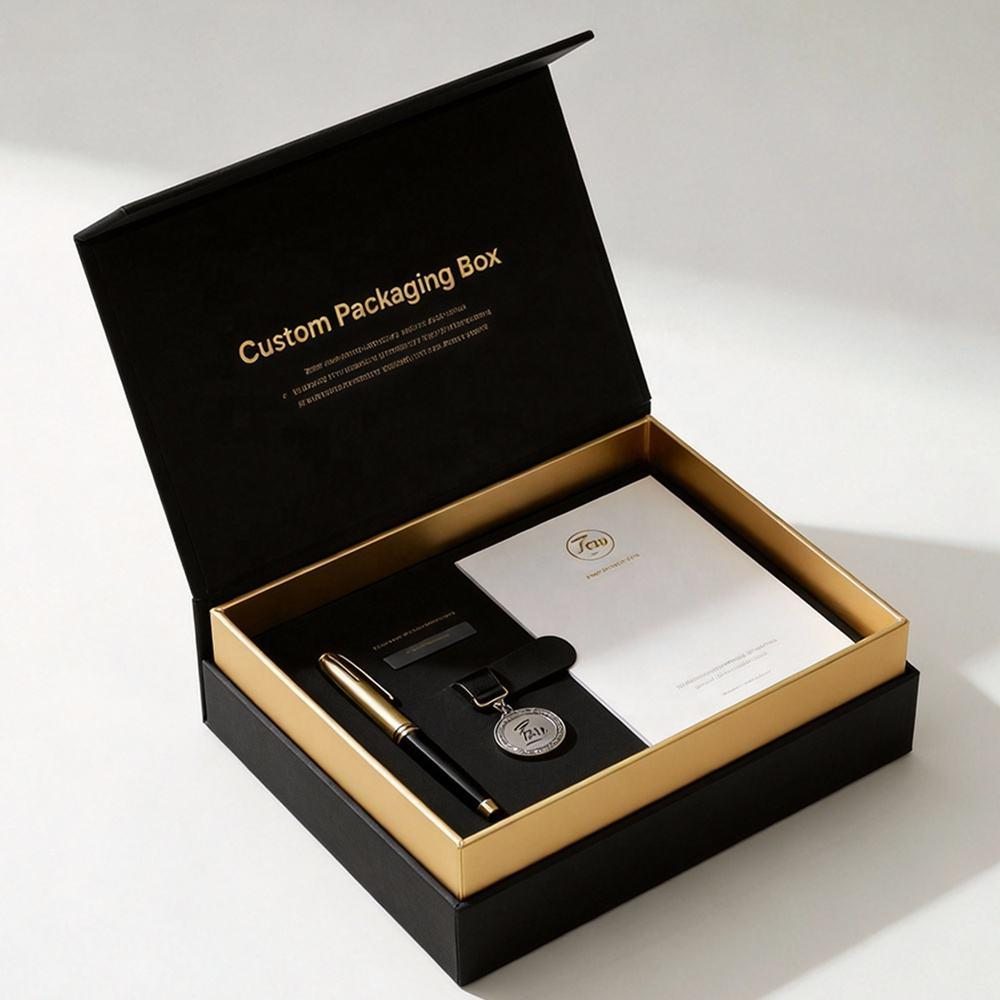
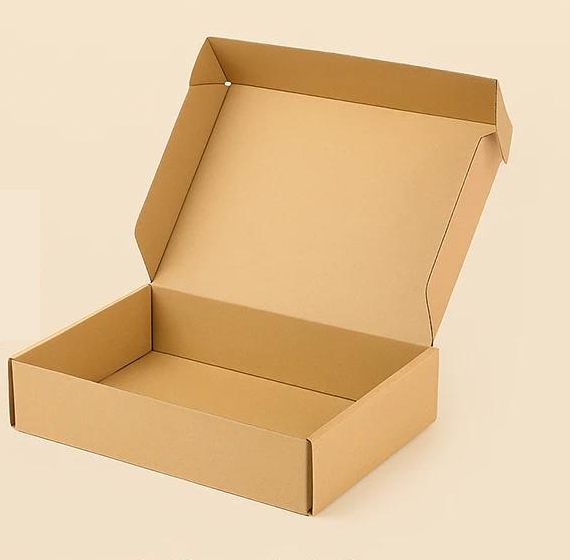
Packaging is designed around the product, so manufacturers work with the inner dimensions of the box — the space available for your product. The outer dimensions are larger, because the thickness of the board is added on every side.
If you only know the outer size you need (for example, to fit a shelf or a shipping carton), tell us so clearly. Otherwise, always give inner dimensions.
The order: Length × Width × Height
Box dimensions are written in a fixed order, measured from the opening of the box:
- Length (L): the longer side of the opening
- Width (W): the shorter side of the opening
- Height (H): the depth, measured at right angles to the opening
The order matters. A 200 × 100 × 50 mm box and a 50 × 100 × 200 mm box contain the same volume, but one opens on its large face and the other on its small end — two completely different structures.
Step by step
- Measure the product at its widest points, including caps, pumps, handles or labels that stick out.
- If several items go in one box, arrange them as they will be packed and measure the whole group.
- Add clearance so the product slides in easily — as a rule of thumb, a few millimetres per dimension for rigid products; less for soft goods, more when an insert or protective padding is used.
- If you use an insert, divider or tray, allow for its thickness as well.
- Write the result in millimetres, in the order L × W × H, and state that these are inner dimensions.
From inner to outer dimensions
Each type of board adds thickness. A folding carton adds very little, while corrugated and rigid boxes add noticeably more. Approximate board thickness:
| Material | Approx. thickness |
|---|---|
| Folding boxboard (carton) | 0.4–0.7 mm |
| E-flute corrugated | about 1.5 mm |
| B-flute corrugated | about 3 mm |
| Rigid box greyboard | 1.5–3 mm |
Your manufacturer calculates the exact outer size from the dieline — but knowing this helps when your box has to fit into a shipping carton, a display or a shelf.
Common mistakes to avoid
- Giving outer dimensions when inner dimensions were meant (or the other way round)
- Mixing up the order, so the opening ends up on the wrong face
- Forgetting parts that stick out, such as pumps, caps or hang tabs
- No clearance — the box looks perfect on screen but the product will not go in
- Measuring in centimetres and rounding too much; always work in millimetres
What to send us for a quotation
To prepare an accurate quote and dieline, send:
- Inner dimensions (L × W × H, mm) or the product dimensions
- Product weight and whether it is fragile
- Box style, or a photo of a box you like
- Quantity per design
- If possible, a physical sample of the product